
A better night may begin with something simpler than another sleep gadget: the way your head, neck, and shoulders are supported.
Eight Hours in Bed—Yet You Still Wake Up Tired and Stiff?
You went to bed on time. You stayed in bed all night. But you wake up feeling as if your body spent the night working instead of recovering.
Your neck feels tight. Your shoulders are tense. You turn your head carefully. By the time you start the day, the first thing you want to do is stretch, rub your neck, or find a better place to lie down.
It is tempting to blame a stressful day or an uncomfortable mattress. But the position of your head and neck also matters. During sleep, your pillow is responsible for supporting the space between your head, neck, and shoulders. If it is too high, too flat, too soft, or constantly collapses, it may leave you in an awkward position for hours.
Harvard Health describes side sleeping and back sleeping as the two positions that are generally easiest on the neck. It also recommends avoiding pillows that are too high or stiff because they can keep the neck flexed overnight and contribute to morning pain and stiffness.1
Your pillow is not just a cushion. It is part of the position your neck holds for much of the night.
Why Alignment Matters While You Sleep
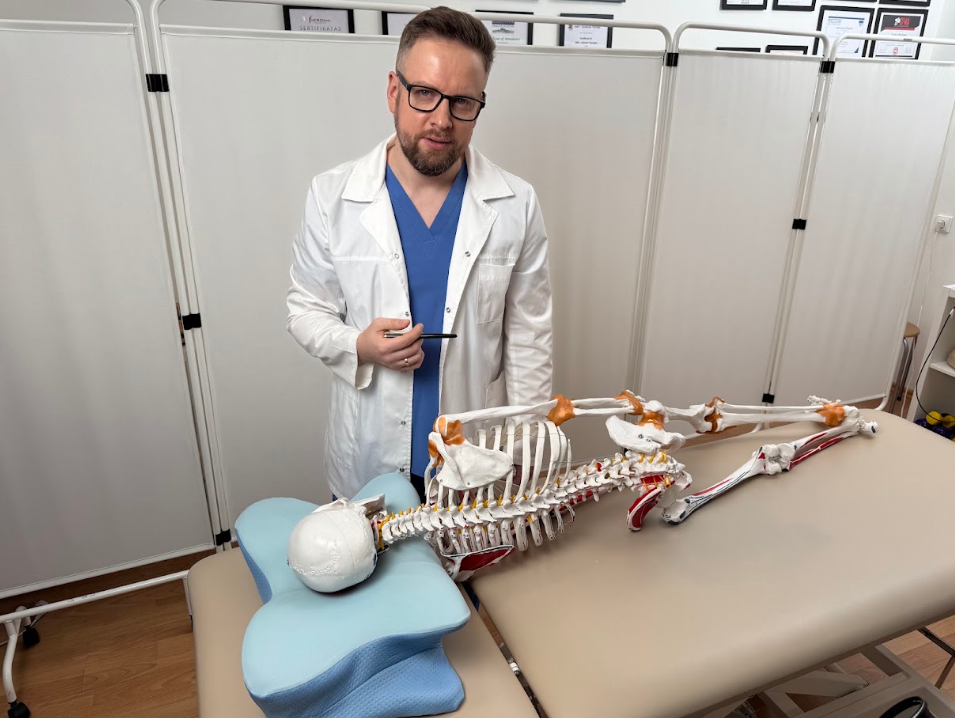
Your head, neck, and spine do not need to be forced into a rigid “perfect” position. They do need enough support to avoid unnecessary bending, twisting, and pressure.
Mayo Clinic advises that a pillow used under the head should keep the neck aligned with the chest and back. For side sleepers, the pillow also needs to accommodate the relationship between the head and shoulder rather than allowing the head to drop sharply to one side.2
This is why pillow height cannot be judged by softness alone. A pillow may feel comfortable for the first ten minutes and still lose support after several hours.
A small biomechanics study published in PeerJ found that changing pillow height altered measured cranio-cervical pressure and modeled cervical-spine alignment in 10 healthy participants. The authors specifically noted that there are no universal, evidence-based pillow-height guidelines for everyone.3
That finding matters because the “right” pillow is not necessarily the highest, firmest, or softest one. It is the one that gives your body an appropriate level of support for your build and sleeping position.

The Pillow Problem Most People Ignore
Many traditional pillows have one large, flat surface. They may feel fine when you first lie down, but they can shift, compress, or lose shape during the night.
When that happens, you may find yourself:
- folding the pillow to create more height;
- pushing it back underneath your head after turning;
- waking with one shoulder compressed;
- sleeping with your head tipped forward or sideways;
- starting the day with stiffness that was not there the night before.
This does not mean every ordinary pillow causes neck pain, and it does not mean an ergonomic pillow will solve every case. It does mean that pillow shape and height are reasonable factors to consider when your sleep position feels unstable.
A 2021 systematic review and meta-analysis in Clinical Biomechanics examined 35 articles, including nine higher-quality studies with 555 participants. The review found that some pillow designs were associated with reductions in neck pain, waking pain, and neck disability in adults with chronic neck pain. It also reported that pillow shape and height may influence cervical alignment, while pillow designs did not clearly improve sleep quality in that population.4
The evidence supports paying attention to pillow design—but it does not justify promising a universal cure or a guaranteed result.
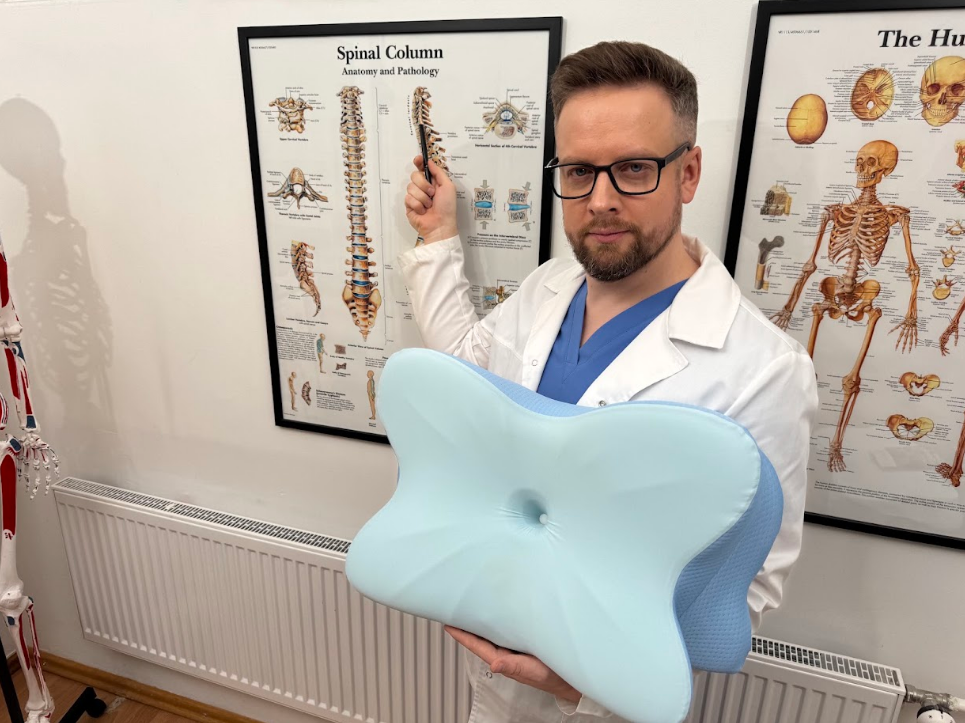
Meet Derila Ergo: A More Structured Way to Support Your Sleep Position
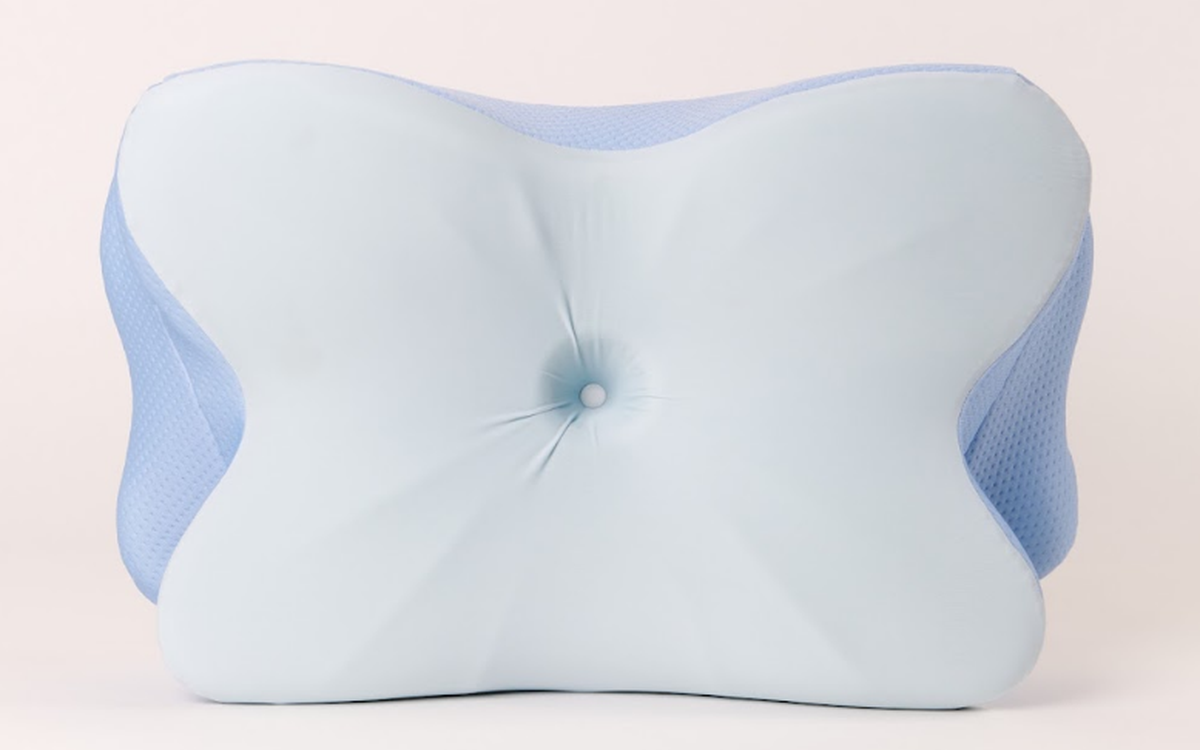
Derila Ergo is designed around the relationship between the head, neck, and shoulders rather than using one undifferentiated block of filling.
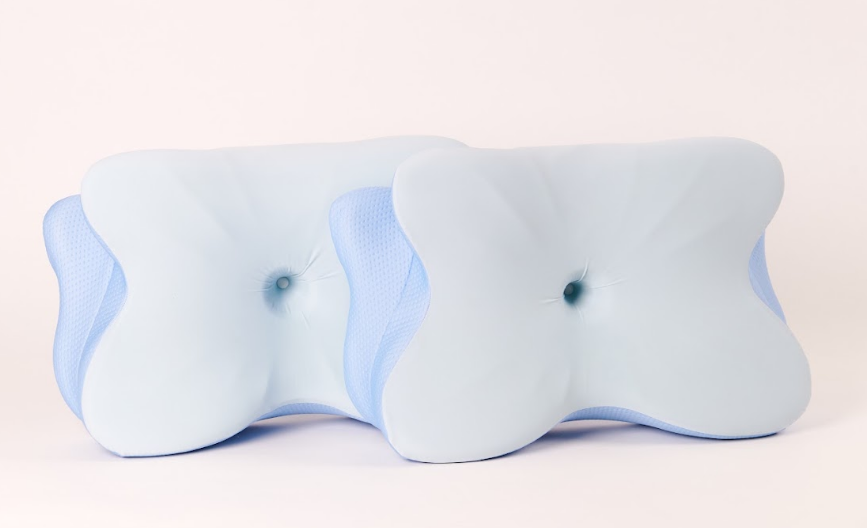
Contoured Side Support
The raised side sections are intended to help give your head a more stable resting area, particularly when you sleep on your side or move during the night.
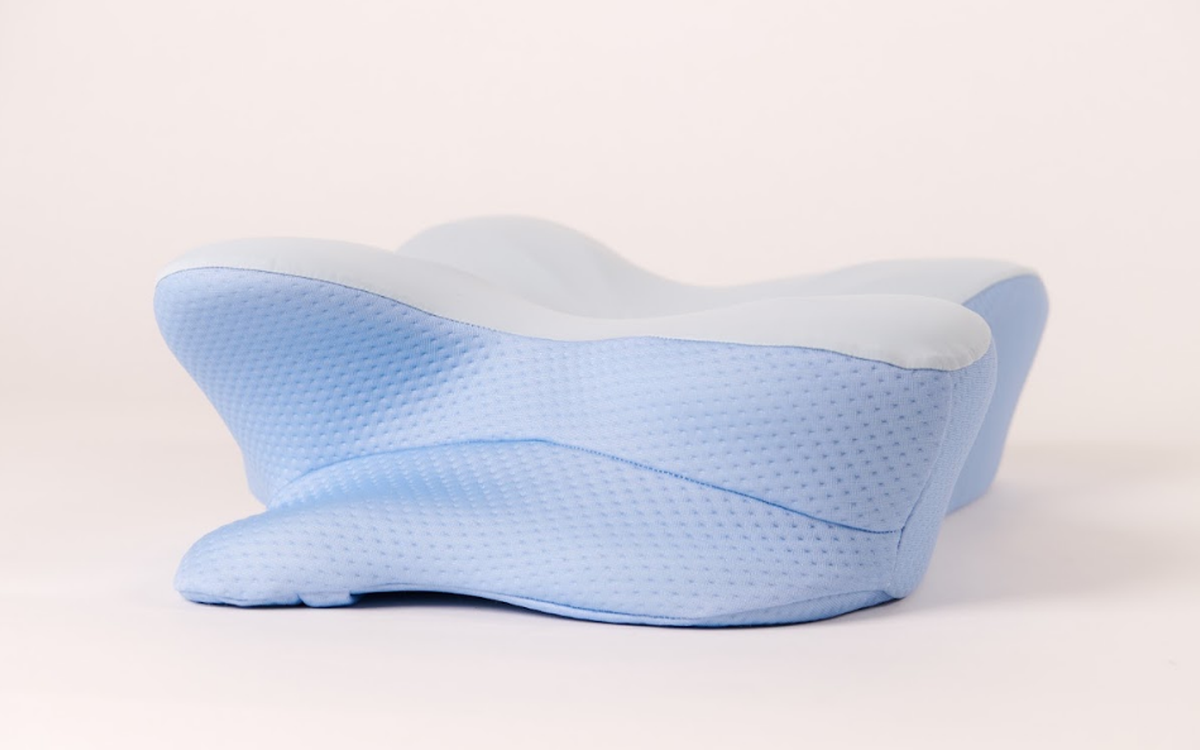
A Shoulder-Friendly Arch
The butterfly-shaped design includes an arch intended to create more room for the shoulder. This can make the pillow feel less like it is pushing the shoulder upward and more like it is supporting the space above it.

Memory Foam That Holds Its Shape
Memory foam is designed to conform to pressure while maintaining more structure than a loose, easily flattened filling. Derila Ergo uses a contoured memory-foam design to provide a more consistent support surface for the head and neck.
Support Without a Complicated Routine
There is no app to learn and no elaborate bedtime process. The goal is straightforward: place your head and neck on a pillow shaped to provide more structured support than a conventional flat pillow.
Derila Ergo may be worth exploring if you often wake with a stiff neck, sleep on your side, constantly adjust your pillow, or feel that your current pillow loses its shape before morning.
Ready to see the current offer?
Lock In 70% Off Before It Sells OutSleep and Pain Can Reinforce Each Other
Poor sleep and musculoskeletal pain are not isolated problems. They can influence one another.
A prospective study of 4,140 healthy working adults aged 45–64 found that baseline sleeping problems were associated with a higher one-year risk of neck, shoulder, and lumbar pain. The reported odds ratios were 1.72 in men and 1.91 in women. The researchers also stated that the study did not establish a causal pathway involving job strain.5
More recently, a systematic review and meta-analysis of 16 articles from 11 study populations, including 116,746 participants, found that sleep problems at baseline were associated with a higher risk of chronic musculoskeletal pain in both the short term and long term. The authors emphasized that the evidence for specific categories of sleep problems was uncertain and that the bidirectional relationship requires further investigation.6
These studies do not prove that a particular pillow prevents chronic pain. They do show why sleep quality, sleep position, and morning discomfort deserve attention together.
A Small Bedroom Change Can Be Worth Investigating
You may have upgraded your mattress, changed your sheets, and tried a new sleep app—while continuing to use the same flattened pillow every night.
That pillow is supporting your head for hours at a time. If it shifts or collapses, your body may spend the night compensating for it.
The question is simple: is your pillow actually supporting the way you sleep?
Derila Ergo offers a contoured alternative for people who want to explore a more structured head, neck, and shoulder support design.

Real Results from Real Patients


Construction worker with severe neck strain. Your recommendation changed my life. First pain-free sleep in a decade. Ordering one for my wife now.


Chronic migraines for 8 years. Tried everything. Three weeks with Derila Ergo and I'm migraine-free. The pressure points work exactly as you described.


Side sleeper with constant morning stiffness. The pressure point therapy is incredible - I wake up feeling like I had a massage all night.


Skeptical at first, but desperate. Two months later, my physical therapist asked what I'd been doing differently. Neck mobility improved 80%.

Check Derila Ergo’s Current Offer and Product Details

The product page currently displays a promotional offer. Discount availability, stock, delivery options, return terms, and final pricing can change, so review the live product page before ordering.